Now shipping nationwide • Free guides & recipes

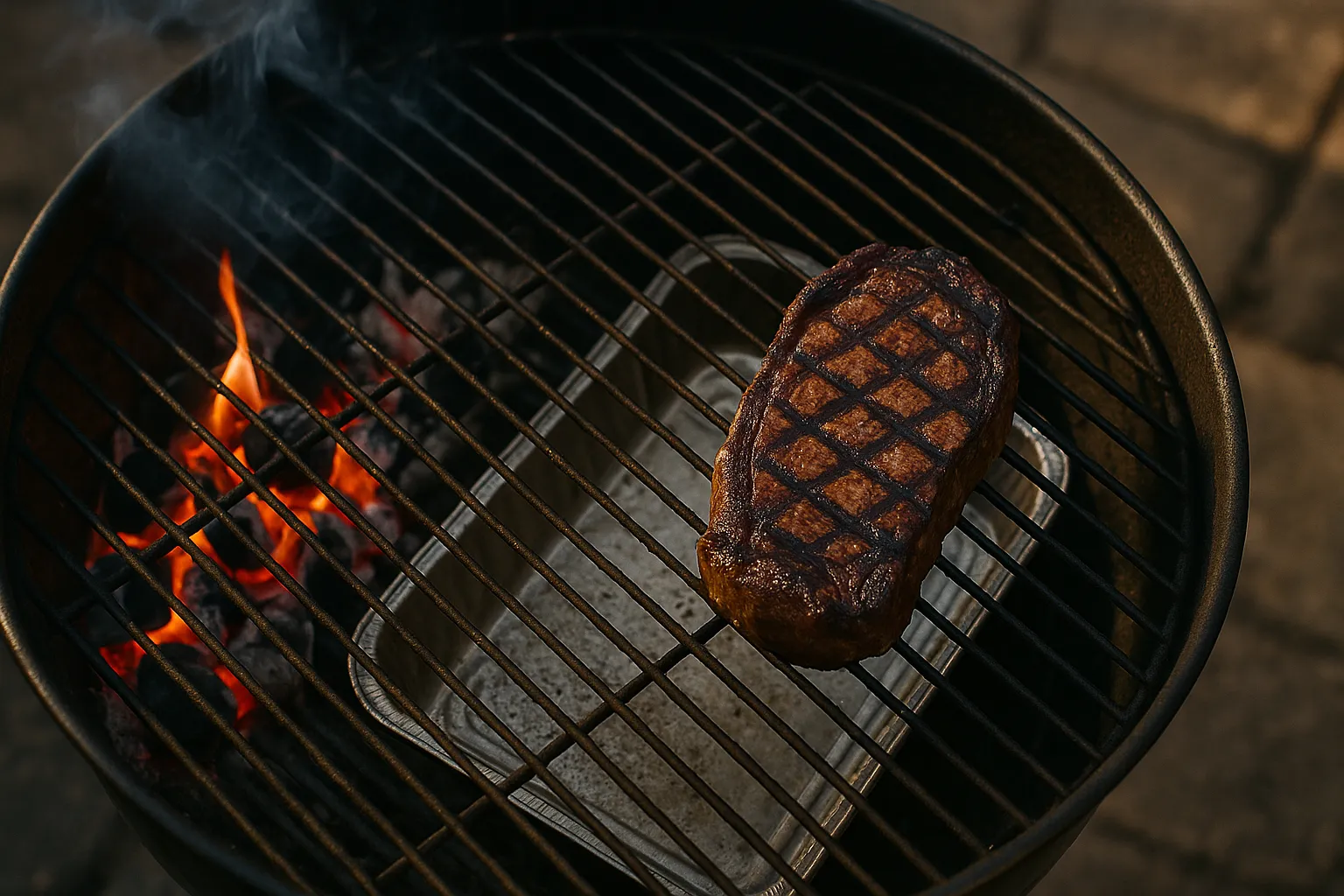
Two-Zone Fire: The Setup That Fixes Everything
Master two-zone fire to prevent flare-ups, nail doneness, and get perfect crust. Simple setups for charcoal and gas, plus reverse-sear and pro tips.

If you only learn one grill technique, make it two-zone fire. It gives you control, prevents flare-ups, and unlocks perfect crust + perfect doneness—on steaks, chicken, fish, veg, even pizza. Here’s the complete, practical guide.
What “Two-Zone” Actually Means
You divide your grill into:
- Direct (hot) zone: Searing and fast cooking over high heat.
- Indirect (cool) zone: Gentle cooking away from flame for control and even doneness.
Think: sear on the hot side → finish on the cool side. Or for reverse-sear: slow on the cool side → final sear on the hot side.
Quick Start (60 Seconds)
- Clean and preheat the grill (lid down, 10–15 minutes).
- Create zones
- Charcoal: Pile lit coals on one half; leave the other half coal-free (place a drip pan there).
- Gas: Turn burners high on one side; off/low on the other.
- Cook smart:
- Sear over direct heat to build crust.
- Move to indirect to finish to temp without burning.
- Lid down to bake/roast on the indirect side and to stabilize temps.
- Check temp with an instant-read thermometer. Rest and serve.
Why It Works (and What It Fixes)
- No more burnt outside, raw inside. You separate crust formation from doneness.
- Fewer flare-ups. Move fatty cuts off the flames in a heartbeat.
- Consistency for thick cuts. Reverse-sear becomes easy and repeatable.
- Versatility. One setup handles steaks, spatchcock chicken, salmon, veggies, sausage, even garlic bread.
Target Temperatures (Guidelines)
- Direct zone: ~450–650°F (232–343°C) for searing.
- Indirect zone: ~225–350°F (107–177°C) for gentle cooking/finishing.
Tip: Place a cheap oven thermometer at grate level on the indirect side for accuracy.
How to Set It Up
Charcoal Kettle (Most Common)
- Light charcoal (chimney recommended).
- Bank the coals to one half (use charcoal baskets if you have them).
- Drip pan under the indirect side keeps flare-ups down and the grill cleaner.
- Vents: Start with bottom and top vents half-open, then tweak: open = hotter, close slightly = cooler.
- Wood chunks (optional): Place 1–2 chunks near the edge of the coal pile for clean smoke.
Gas Grill
- Preheat all burners on high (lid down).
- Turn one side to high/medium-high (direct zone) and the other side to off/low (indirect zone).
- If you have 3+ burners, run outer burners medium-high, center burner off for a wide indirect area.
- For smoke, use a foil pouch of wood chips over a lit burner or a smoker tube.
Kamado / Ceramic Grills
- Use the heat deflector/platesetter to create indirect convection on one side (or the whole grill), then sear either on direct grates above a lit half, or finish indirect with the deflector. Airflow adjustments are sensitive—small vent changes, wait 5–10 minutes to stabilize.
How to Cook with Two-Zone Fire
Classic Sear → Finish (Steaks, Chops)
- Pat dry, season.
- Sear over direct heat 1–3 minutes per side to crust.
- Finish over indirect to your target temp (flip once, lid down).
- Rest 5–10 minutes.
Reverse-Sear (Thick Steaks/Roasts)
- Indirect first at 225–275°F (107–135°C) until 10–15°F (6–8°C) below target.
- Hard sear over direct heat 45–90 seconds per side.
- Rest briefly.
Chicken (Crispy Skin, Juicy Inside)
- Indirect most of the way (325–375°F / 163–190°C), skin side up, lid down.
- Finish skin side down over direct to crisp.
- Safe temps: chicken breast/thigh 165°F (74°C).
Fish/Seafood
- Indirect to almost done, quick kiss of direct heat for color. Use a clean, oiled grate or a grill mat/foil.
Veggies
- Dense veg (potatoes, carrots): Indirect roast; finish direct to char edges.
- Tender veg (asparagus, peppers): Mostly direct, moving to indirect if browning too fast.
Doneness Cheat Sheet (Pull Temps)
- Steak (whole-muscle): Rare 120–125°F (49–52°C) · Medium-rare 130–135°F (54–57°C) · Medium 140–145°F (60–63°C).
Food-safety note: USDA guidance for whole-muscle beef/pork is 145°F (63°C) with rest. - Pork: 145°F (63°C) + rest.
- Ground beef: 160°F (71°C).
- Chicken: 165°F (74°C).
Pro Tips & Small Upgrades
- Grate-level thermometer on the indirect side = better control than lid thermometers.
- Oil the food, not the grate to reduce sticking and flare-ups.
- Two sets of tongs (raw vs. cooked) for safe handling.
- Lid is your oven door. Keep it closed on the indirect side to bake/roast.
- Wind matters. Position the vent over the food on the indirect side to pull clean heat/smoke across it.
- Rest on a rack, not a plate, to preserve crust.
Common Mistakes (and Fixes)
- Entire grill is scorching: Close vents slightly (charcoal) or lower burners (gas). Use the indirect side!
- Sooty, bitter smoke: Too many chips/chunks; let wood smolder, not smother.
- Flare-ups under fatty meat: Move to indirect immediately; keep a drip pan under that area.
- Gray, weak crust: Start hotter on the direct side; make sure surfaces are dry; don’t crowd the grate.
Two-Zone Variations
- Snake/Fuse (charcoal, long cooks): Arrange a curved line of briquettes 2-wide, 2-high around the edge; light one end for hours of steady indirect heat.
- Center-off (3-burner gas): Left + right burners on, center off for a big indirect zone in the middle.
- Reverse-sear with cast-iron: Finish sear in a ripping-hot skillet on the direct side for extra crust.
Gear That Helps (Optional)
- Chimney starter (charcoal)
- Charcoal baskets for neat coal banking
- Instant-read thermometer (fast and accurate)
- Drip pans (aluminum)
- Heat-resistant gloves
Frequently Asked Questions
Do I need a fancy grill to run two-zone?
No. Any charcoal or gas grill works. You just need a hot side and a cool side.
How hot should my sear zone be?
Aim for 450–650°F (232–343°C). If you can hold your hand 5 inches above the grate for <2 seconds, it’s hot enough.
Can I do two-zone on a small kettle?
Yes—bank coals tightly to one half. Use a small drip pan on the other half and cook with the lid down.
Gas grills: which burners on/off?
Run one side on high/med-high, keep the other side off/low. With 3+ burners, turn the middle off for a bigger indirect zone.
Why is my steak burnt outside but underdone?
You stayed on direct heat too long. Sear, then finish indirect to target temp.
How do I add smoke flavor on gas?
Use a foil pouch or smoker tube over a lit burner. Go light—clean, thin smoke is best.
When should I choose reverse-sear?
For thick cuts (≥1¼–1½ in / 3–4 cm) or rich, fatty steaks (ribeye). It delivers edge-to-edge doneness and a final, fast crust.
Do I keep the lid open or closed?
Closed for indirect/baking and to stabilize heat. Open briefly to flip or sear.
Can I roast and sear chicken with two-zone?
Yes. Roast indirect to near-done, then finish skin-side down direct to crisp without burning.
What thermometer do I need?
An instant-read for meat and a cheap grate thermometer for the indirect side make a huge difference.
Pro Move to Practice Tonight
Run the grill at 550°F direct / 300°F indirect. Reverse-sear a 1½-inch strip steak: indirect to 120–125°F (49–52°C), rest 5 minutes while you crank the direct side, then 60–90 seconds per side for that deep, steakhouse crust.
