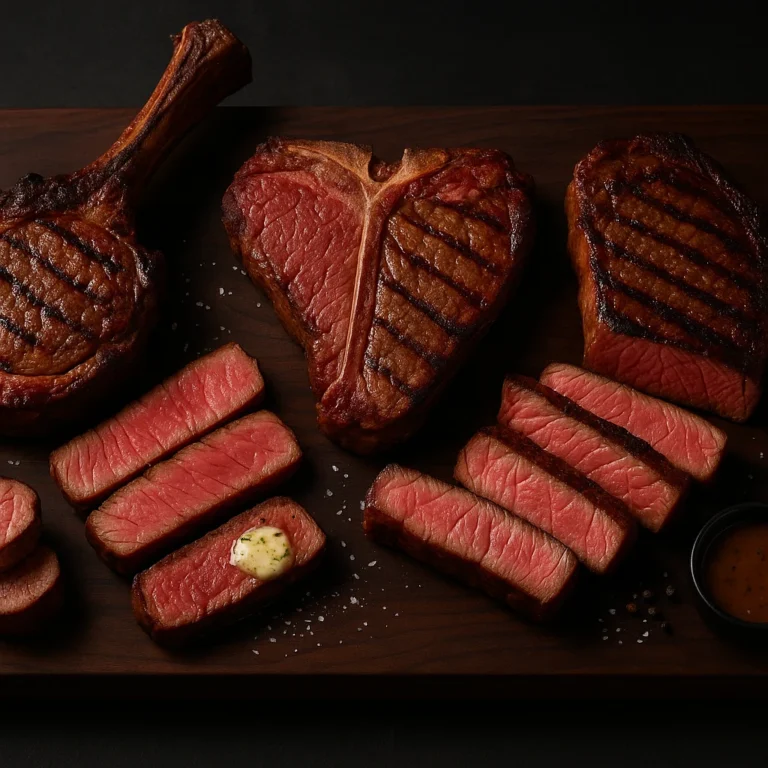
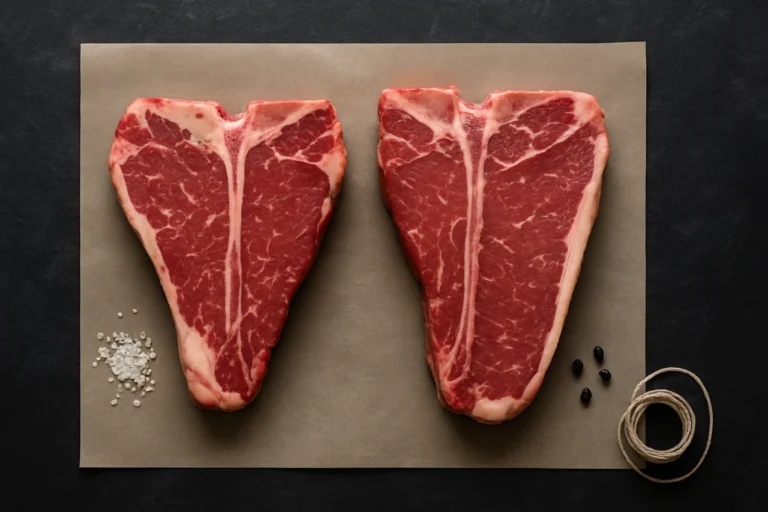
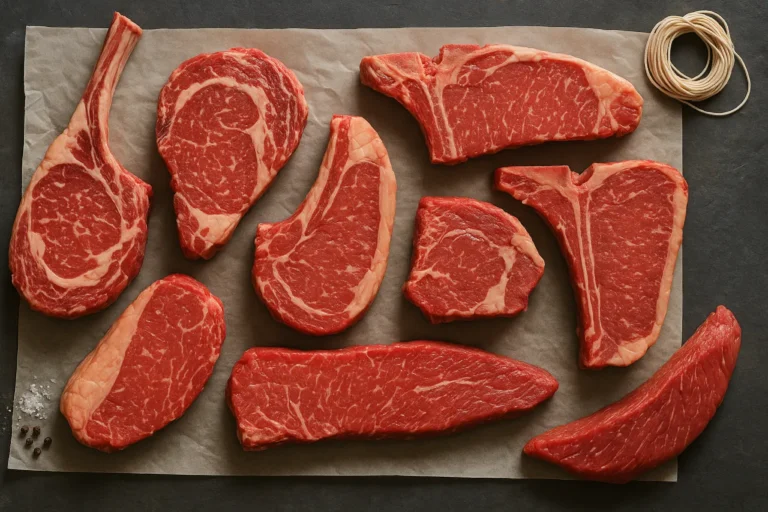
Now shipping nationwide • Free guides & recipes

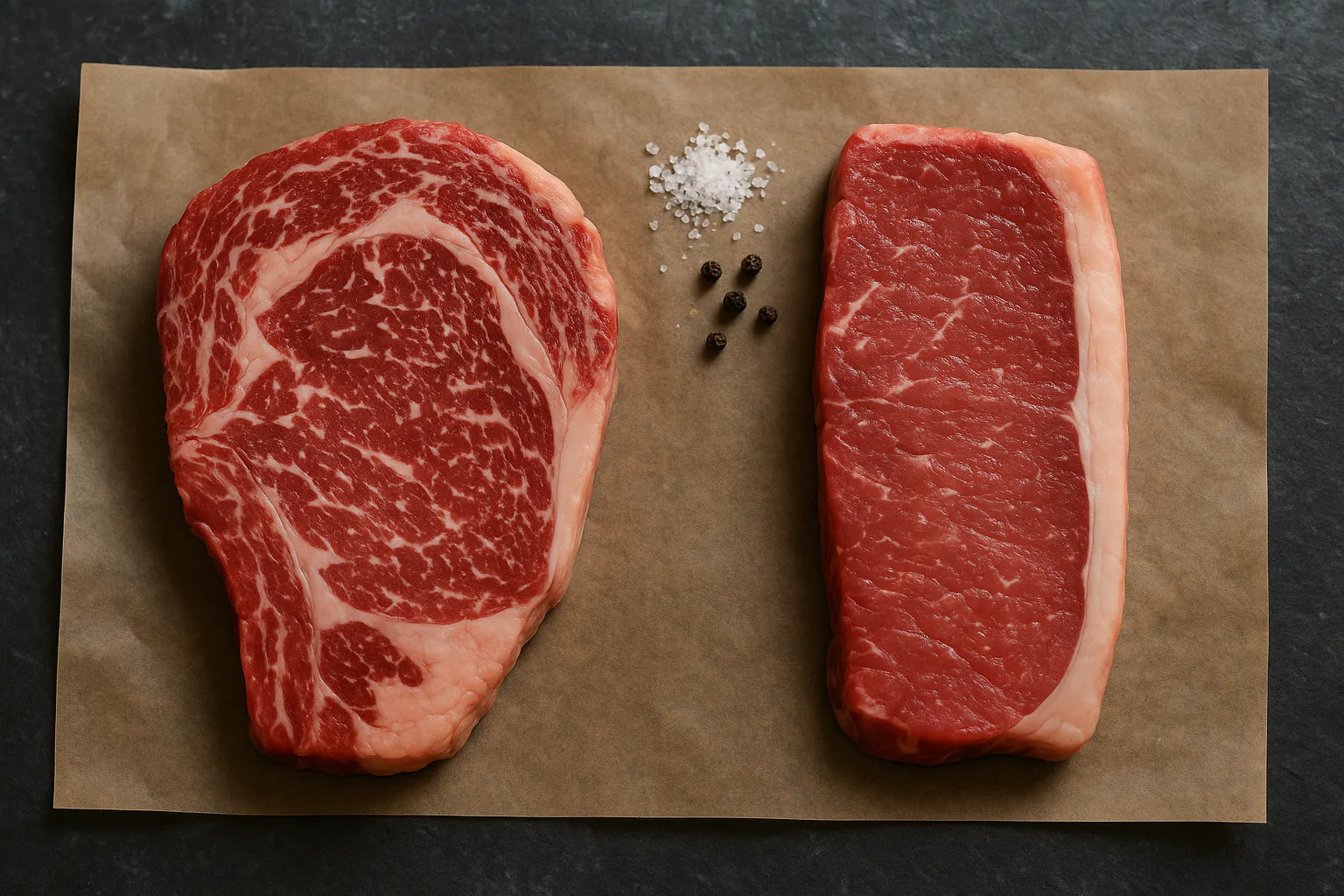
Marbling 101

How Intramuscular Fat Changes Flavor, Tenderness & Price
If steak had a superpower, it would be marbling—those fine, white streaks of intramuscular fat woven throughout the meat. Marbling is the #1 predictor of a steak’s richness, juiciness, and perceived tenderness—and it’s a big reason one cut costs more than another.
Below is a clear, practical guide to understanding marbling, spotting it at the butcher counter, and cooking it right (whether your steak is lean, moderately marbled, or decadently rich).
TL;DR (Quick Take)
- More marbling = richer flavor & juicier bite.
- Prime > Choice > Select (U.S. grading by marbling level).
- Fine, evenly distributed flecks beat big, chunky deposits.
- High-marble cuts love reverse-sear and controlled heat.
- Lean cuts stay succulent with higher thickness, fast sear, and butter basting.
What Marbling Actually Is
Marbling = intramuscular fat (IMF). It’s not the external fat cap or large seams between muscles—that’s intermuscular fat. Good marbling appears as fine, snow-like flecks within the muscle fibers.
Why it matters:
- Tenderness: Fat interrupts muscle fibers, making the chew feel softer.
- Juiciness: Fat contributes richness and mouthfeel that reads as “moist.”
- Flavor: Fat carries flavor compounds; more marbling = rounder, “buttery” taste.
- Browning insurance: Fat helps even browning and a glossy crust.
How Marbling Is Graded
U.S. (USDA)
- Prime: Highest typical marbling at retail. Luxurious texture and flavor.
- Choice: Moderate to abundant marbling (varies). Great value tier.
- Select: Leaner; needs precise cooking to avoid dryness.
Japan (Wagyu, BMS 3–12)
- BMS (Beef Marbling Standard) scores 3–12, where 10–12 is extremely marbled (A5-level).
- Expect an ultra-rich, almost “creamy” experience at the high end.
Australia (MSA / AUS-Meat)
- Marbling scores 0–9+. A 6–9+ steak will rival the richness of top-tier wagyu crosses.
Key insight: Across systems, finer, evenly distributed marbling beats thick, patchy chunks.
What Good Marbling Looks Like (at a glance)
- Even coverage: Flecks spread across the face—not all in one corner.
- Fine grain: Tiny, snow-like specks > big waxy globs.
- No gray zones: Bright, fresh color with consistent flecking.
- Right cut, right expectations: Ribeye > Strip > Sirloin for inherent marbling; tenderloin is tender but typically lean.
Cut-by-Cut Marbling Expectations
- Ribeye (high): Lush, juicy. Deckle/spinalis (rib cap) is especially rich.
- New York Strip (moderate): Beefy chew, defined fat cap edge, balanced flecking.
- Flat Iron (surprisingly high): Great marbling and value; remove silver skin.
- Chuck Eye (value ribeye): Often well marbled; exciting budget pick.
- Picanha/Top Sirloin Cap (moderate with fat cap): Leaner interior; crisp the cap.
- Tri-Tip (moderate/lean): Flavorful; avoid overcooking.
- Skirt/Flank (lean): Big flavor, low marbling; thin—cook hot/fast to med-rare.
- Tenderloin/Filet (low): Soft texture from low connective tissue, not marbling—use butter basting for richness.
Cooking by Marbling Level
High Marbling (Prime ribeye, wagyu, BMS 6+)
- Best methods: Reverse-sear, cast-iron sear + butter baste, two-zone grill to manage flare-ups.
- Doneness: Medium-rare (130–135°F / 54–57°C) keeps richness without greasiness.
- Tip: Thicker steaks (1¼–1½ in / 3–4 cm) give control and a perfect crust-to-center ratio.
Moderate Marbling (Choice strip, flat iron, picanha)
- Best methods: High-heat grill, cast-iron sear.
- Doneness: Medium-rare to medium (130–140°F / 54–60°C) for balance.
- Tip: Finish edges/fat caps directly over heat to render and crisp.
Low Marbling (select sirloin, tri-tip, flank/skirt)
- Best methods: Hot & fast, thin-slice against the grain.
- Boost juiciness: Compound butter, basting, sauces (chimichurri), or marinades for thin cuts.
- Doneness: Keep rare to medium-rare for thin steaks; tri-tip can go medium with care.
Safety note: USDA guidance for whole-muscle beef is 145°F (63°C) with a rest. Many steak lovers pull earlier for quality; decide based on preference + risk tolerance.
Reverse-Sear: The Marbling Multiplier
For richly marbled steaks, reverse-sear lets fat gently render before a blazing-hot finish:
- Indirect/oven at 225–275°F (107–135°C) to 10–15°F (6–8°C) below target.
- Hard sear 45–90 seconds per side.
- Rest 5–10 minutes.
Result: edge-to-edge doneness with a deep, lacquered crust—and less flare-up drama.
Aging & Marbling
- Dry-aged (21–45+ days): Concentrates beefiness, adds nutty complexity. Marbling remains, flavor intensifies; surface moisture loss improves searing.
- Wet-aged: Common and consistent; clean, beef-forward flavor.
Grass-Fed vs. Grain-Finished
- Grass-fed: Typically leaner marbling, brighter/mineral notes, faster to overcook.
- Grain-finished: Richer marbling, rounder “buttery” profile, steakhouse vibe.
Both can be stellar; cook techniques should match marbling level.
Budget Strategy: Get More Marbling for Less
- Choice NY Strip over Prime ribeye for savings with plenty of satisfaction.
- Flat iron and chuck eye punch above their price in marbling and flavor.
- Buy whole subprimals (e.g., whole strip loin), portion at home, and freeze smartly.
- Watch specials after holidays; stock up when marbled packs land.
Prep, Trimming & Seasoning
- Pat dry for better Maillard browning.
- Salt early (45–60 min ahead) or right before sear—both work; avoid the 5–30 minute “mushy” middle.
- Trim fat caps only if excessive; keep enough to self-baste.
- Oil the steak, not the grate to reduce flare-ups.
Common Myths (and Truths)
- “All fat is bad.”
Marbling is key to steak quality. Portion size + frequency matter more than demonizing IMF. - “Bone-in always tastes better.”
Bone changes heat dynamics and presentation; marbling and technique drive most flavor differences. - “You must cook high-marble steaks very rare.”
Medium-rare often tastes best; some prefer medium to render more fat. Personal preference rules—just avoid drying them out.
Doneness Cheat Sheet (Pull Temps)
- Rare: 120–125°F (49–52°C)
- Medium-rare: 130–135°F (54–57°C)
- Medium: 140–145°F (60–63°C)
- Rest: 5–10 min; juices redistribute and crust sets.
Frequently Asked Questions about Marbling
Is marbling the same as the fat cap?
No—marbling is inside the muscle; the fat cap sits on the outside.
Does more marbling always mean better?
Usually for richness/tenderness, yes. But if you prefer a beefier, firmer chew, moderate marbling (e.g., strip) may be your sweet spot.
Why do wagyu steaks look pale and extra fatty?
Ultra-high BMS scores mean very high intramuscular fat—they cook fast and eat incredibly rich.
What’s the best way to cook a very marbled steak?
Reverse-sear or two-zone grilling—you’ll render fat gently, then finish with a fierce crust.
How thick should I buy?
Aim for 1¼–1½ in (3–4 cm). Thin steaks overcook before you get a great crust.
How do I keep lean steaks from drying out?
Hot/fast cooking, pull earlier, slice against the grain, and use compound butter or sauces.
Does aging increase marbling?
No—aging concentrates flavor and changes texture, but it doesn’t add intramuscular fat.
Is grass-fed always tougher?
Not necessarily, but it’s often leaner. Adjust cook method (pull earlier, baste, rest).
Do I need to trim internal fat?
You can’t—that’s marbling and it’s what you want. Trim only excess external fat if needed.
Is Prime worth it?
If you love rich, buttery steaks, yes. For value, top-end Choice can be fantastic.
Why does my fatty steak flare up?
Rendered fat hitting flame. Use a two-zone setup and move to indirect to control.
Does sous vide work for marbled steaks?
Absolutely—finish with a very hot sear to build crust without overcooking the center.
Pro Move Before You Buy
At the meat case, line up two steaks of the same cut and grade. Pick the one with finer, more even flecking across the entire face. That small choice is the biggest upgrade you can make—before you ever light the grill.