Now shipping nationwide • Free guides & recipes

Dry-Aged vs. Wet-Aged Beef: Taste & Value

Aging is the quiet magic behind great steak. Do you want clean, beef-forward juiciness or nutty, concentrated depth? Here’s a plain-English guide to what dry-aging and wet-aging do to flavor, texture, and price—plus how to buy and cook each.
TL;DR (Quick Take)
- Dry-aged (typically 21–45+ days): Drier exterior, concentrated “beefy-nutty” flavor, tender bite, premium price (time + trim loss).
- Wet-aged (typically 7–28 days): Clean, juicy, classic steak flavor, consistent and better value, widely available.
- Value math: Dry-aging loses water + outer trim (≈25–35% total), so the effective cost per edible pound rises—worth it if you love that distinctive flavor.
What Aging Actually Does
Inside the muscle, natural enzymes gently break down tough proteins (tenderizing). At the same time:
- Dry-aging: Water evaporates from the meat’s surface (flavor concentration), and slow oxidation changes fat flavor—think nutty, roasted, sometimes “blue-cheese” notes.
- Wet-aging: The beef is vacuum-sealed (cryovac) and ages in its own juices. Enzymes tenderize without moisture loss, preserving a clean, beef-forward profile.
How They’re Done (In Brief)
Dry-Aged
- Whole subprimals (e.g., strip loin, ribeye) are aged on open racks in cold, controlled airflow with strict sanitation.
- After aging, the dried outer crust is trimmed away; you buy the steaks cut from the now smaller inner piece.
Wet-Aged
- Subprimals are vacuum-sealed and held cold. No trimming loss from a dried crust, so yield stays high.
Why you rarely see “dry-aged filet”: tenderloin is already tender and lean, so it doesn’t gain as much from dry-aging—and you’d trim away too much precious meat.
Flavor & Texture: What You’ll Taste
| Trait | Dry-Aged | Wet-Aged |
|---|---|---|
| Flavor | Concentrated, nutty/roasty, sometimes “blue-cheese” or umami | Clean, beef-forward, slightly metallic/mineral brightness |
| Juiciness | Slightly less water, but richer mouthfeel | Juicier perception (more moisture retained) |
| Texture | Tender, silky; firmer surface from drying | Tender, plush; smoother surface |
| Best fans | Steakhouse “funk” lovers | Classic steak lovers, weeknight crowd |
Cost & Value (Real Talk)
Dry-aging ties up cooler space for weeks and sacrifices weight twice:
- Moisture loss: ~10–20%
- Trim loss: ~10–20%
Net edible loss: ≈25–35% is common.
Back-of-napkin math:
If a subprimal costs $20/lb pre-aging and loses 30% to water + trim, the effective raw cost becomes $20 / 0.70 ≈ $28.60/lb—before normal cooking shrink. That’s the main reason dry-aged steaks cost more.
Wet-aged keeps yield high, so it often wins on price-to-pleasure for most buyers.
When to Choose Each
- Choose dry-aged if you want a special-occasion, complex, nutty steak and don’t mind paying extra. Ideal on strip and ribeye.
- Choose wet-aged for everyday value and clean, juicy beef—great across cuts, including tenderloin.
- Hosting? Offer both: a dry-aged strip for the flavor seekers and wet-aged ribeyes for classic juiciness.
Cooking Tips (They Cook a Little Differently)
Dry-Aged
- Cooks faster (less water to heat). Start checking temp earlier.
- High heat, short sear for a deep crust; avoid scorching the drier surface.
- Season normally; many prefer salt + pepper to let the funk sing.
- Target temps (pull): Rare 120–125°F (49–52°C) · Medium-rare 130–135°F (54–57°C) · Medium 140–145°F (60–63°C). Rest 5–10 min.
Wet-Aged
- Pat very dry (the “purge” is just myoglobin-rich juice) for better browning.
- Two-zone grill or cast-iron + butter baste works brilliantly.
- Same pull temps as above; rest 5–10 min.
- Sauces (peppercorn, chimichurri) pair well with the cleaner profile.
Food-safety note: USDA guidance for whole-muscle beef is 145°F (63°C) with a rest. Many steak lovers pull earlier for quality; choose based on your preference.
Buying Guide & Label Smarts
- Look for days aged: Dry-aged commonly 21–45; 60+ gets pronounced funk; 90–120 is very bold. Wet-aged often 7–28.
- Grade first: Prime > Choice > Select for marbling; aging can’t invent intramuscular fat.
- Cuts: Dry-aged strip/ribeye shine. Wet-aged is great on tenderloin and value cuts like flat iron.
- Color/trim: Dry-aged steaks should be trimmed clean (no dark rind). Wet-aged packs should look bright with minimal off-odors.
Common Myths (Busted)
- “Dry-aged = dry/tough.” False. It’s often more tender; the surface is drier but the bite is silky.
- “Wet-aged is just sitting in blood.” False. The liquid is myoglobin-rich purge, not blood.
- “Bone makes it dry-aged by default.” No—bone-in is common, but aging method is separate.
Frequently Asked Questions
How many days is the “sweet spot” for dry-aging?
Many love 30–45 days: concentrated but not overpowering. 60–90 brings stronger funk for adventurous palates.
Does wet-aging add flavor, or just tenderness?
Mostly tenderness and a clean beef note. It won’t develop the nutty/roasty complexity of dry-aging.
Why do dry-aged steaks look darker?
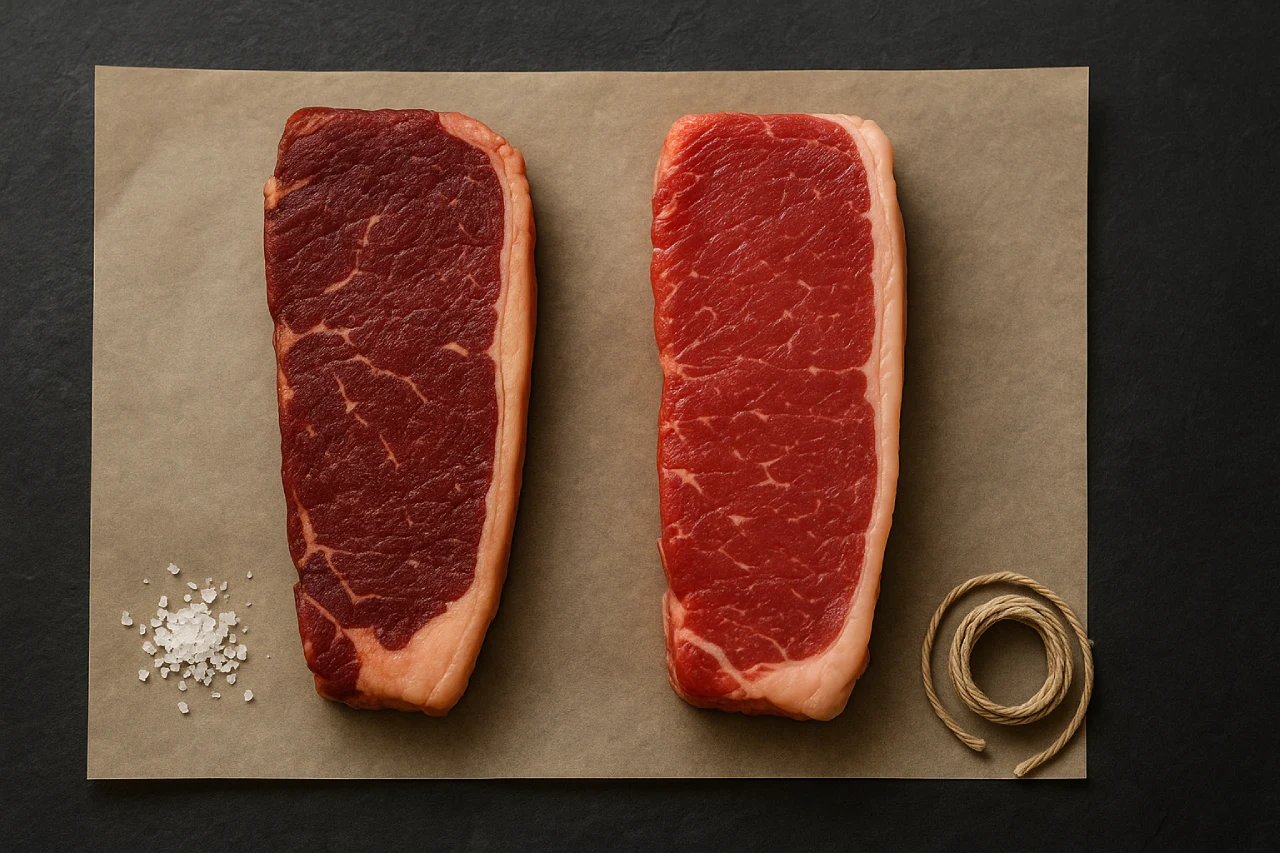
Surface dehydration + oxidation. The dark rind is trimmed off before sale; the interior should be a deep, vibrant red.
Is dry-aged worth the price?
If you love concentrated, nutty steak—yes. If you prefer juicy, straightforward beef (or you’re feeding a crowd), wet-aged is the value winner.
Can I dry-age at home safely?
True dry-aging requires precise temperature, humidity, and airflow. Unless you have a dedicated setup, it’s safer to buy professionally dry-aged steaks.
Which cuts benefit most from dry-aging?
Strip loin and ribeye (with protective fat/bone). Lean tenderloin benefits less.
Do I salt dry-aged steaks differently?
Season normally. Because they cook faster, focus more on monitoring temperature than on changing salt levels.
Final Bite
If you crave bold, nutty steakhouse character, splurge on dry-aged strip or ribeye. If you want juicy, classic beef at a friendlier price, wet-aged is your everyday hero. Either way, grade + thickness + technique will make or break the experience.