Now shipping nationwide • Free guides & recipes

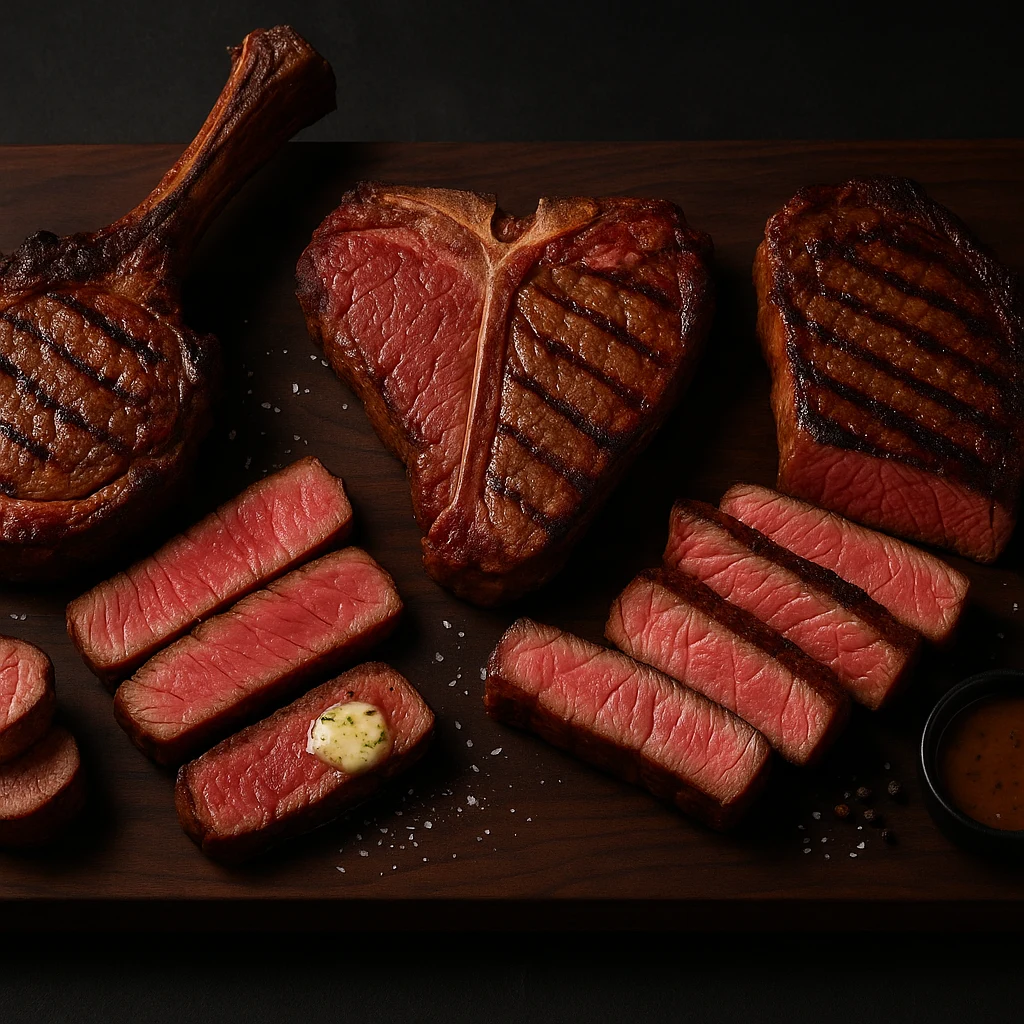
The Steaks That Made the Steakhouse Famous
From ribeye and strip to porterhouse, filet, and tomahawk—see the cuts, portions, and cooking styles that define classic steakhouses.

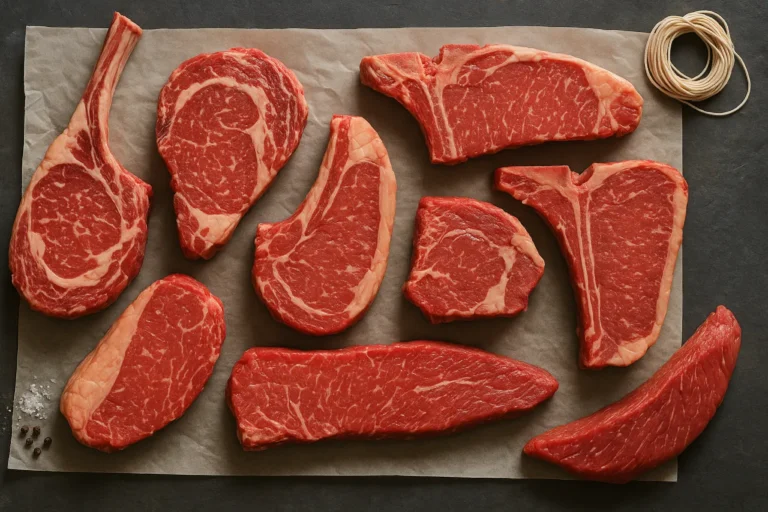
Every great steakhouse is built on a short list of legendary cuts—rich ribeyes, beefy strips, dramatic porterhouses, and melt-in-your-mouth filets—plus a handful of classic preparations that never go out of style. Here’s a clear, practical guide to the icons, how to order them, and the portions that make sense for one…or two.
TL;DR (Quick Take)
- Ribeye = marbling king, buttery and juicy (boneless or bone-in).
- New York Strip = beef-forward chew with a killer crust.
- Porterhouse/T-bone = two steaks in one (strip + tenderloin); porterhouse has the bigger filet.
- Filet Mignon = most tender, mild flavor; loves sauces.
- Prime Rib = roast of the ribeye, slice to order—juicy and luxe.
- Tomahawk/Cowboy = bone-in ribeye with show-stopping presentation.
- Chateaubriand = center-cut tenderloin roast for two.
Pro move: Ask for 1¼–2 inches thick. It’s the sweet spot for an intense crust and a perfect center.
The Iconic Cuts (What to Order & Why)
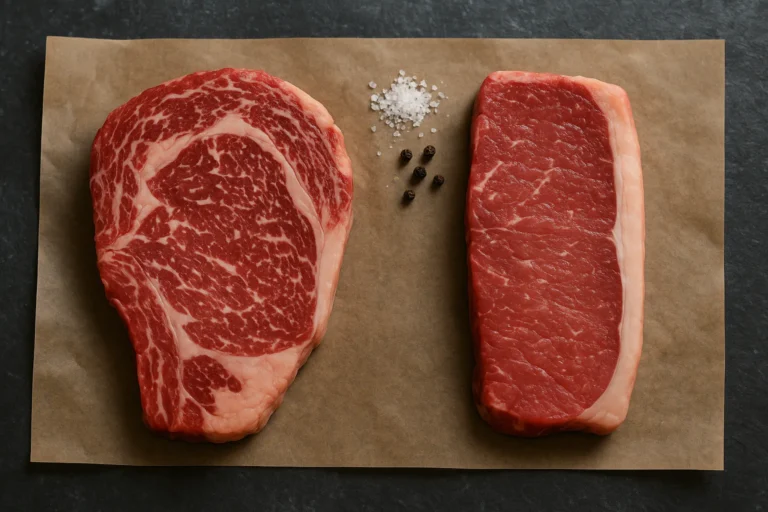
1) Ribeye (Boneless or Bone-In)
- What it is: From the rib primal; the most marbled common steak.
- Why it’s famous: Incredibly juicy, “buttery” richness; crowd-pleaser.
- Best methods: Two-zone grill, cast-iron sear + butter baste, or reverse-sear for thick cuts.
- Typical portions: 12–20 oz boneless; 18–24 oz bone-in.
- Order like a pro: Ask for the rib cap (spinalis) side heavy—best bite on the steak.
2) New York Strip (a.k.a. Sirloin Strip, Shell/Kansas City Strip bone-in)
- What it is: From the short loin; moderately marbled with a firm, satisfying chew.
- Why it’s famous: Beefy flavor + legendary crust potential.
- Best methods: Searing heat (broiler or cast iron) and quick finishing to temp.
- Typical portions: 12–16 oz boneless; 16–20 oz bone-in.
- Order like a pro: Bone-in (“shell steak”) adds drama and a touch of insulation near the bone.
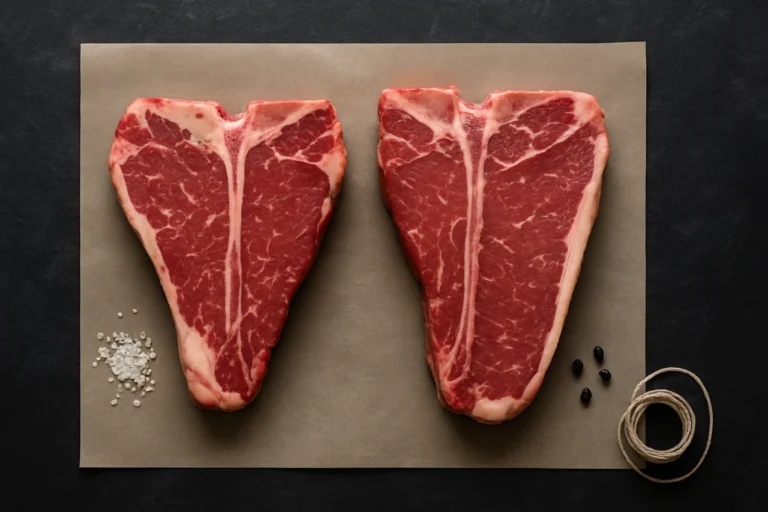
3) Porterhouse & T-Bone
- What they are: Both cut from the short loin with a T-shaped bone: strip on one side, tenderloin on the other.
- Key difference: Porterhouse has a larger tenderloin; T-bone’s is smaller.
- Why they’re famous: Two textures, one steak—perfect to share.
- Best methods: Reverse-sear or two-zone grill to keep the tenderloin from overcooking.
- Typical portions: T-bone 16–24 oz; Porterhouse 24–36+ oz.
- Order like a pro: Place the tenderloin farther from the hottest zone during cooking.
4) Filet Mignon (Tenderloin)
- What it is: The softest steak, very lean.
- Why it’s famous: Tenderness; perfect with sauces or a peppercorn crust.
- Best methods: Hot sear + butter baste; great candidate for bacon wrap.
- Typical portions: 6–12 oz medallions; Chateaubriand for two (see below).
- Order like a pro: Pair with Béarnaise, au poivre, or compound butter to boost richness.
5) Prime Rib (Standing Rib Roast)
- What it is: A roasted ribeye on the bone, sliced to order.
- Why it’s famous: Luxuriously juicy with a seasoned crust; a weekend or holiday staple.
- Best methods: Slow roast, rest well, finish with a hot blast or sear for crust.
- Typical portions: 12–16 oz per slice; king cuts larger.
- Order like a pro: Ask for end cut for extra crust or center cut for uniform doneness.
6) Tomahawk / Cowboy Ribeye
- What it is: Bone-in ribeye; tomahawk has an extra-long frenched bone, cowboy is shorter.
- Why it’s famous: Table-side spectacle + ribeye richness.
- Best methods: Two-zone or reverse-sear to manage flare-ups and nail the center.
- Typical portions: 32–50 oz (shareable).
- Order like a pro: Carve off the bone, slice, and re-plate against the bone for presentation.
7) Chateaubriand (for Two)
- What it is: Center-cut tenderloin roast, often served with Béarnaise or demi-glace.
- Why it’s famous: Ceremony—tableside carving, classic sauces.
- Best methods: Gentle roast to temp, then a quick sear for color.
- Typical portions: 16–24 oz to share.
- Order like a pro: Pair with crispy potatoes and a bright green veg to balance richness.
Steakhouse Sauces & “House Styles”
- Au Poivre: Brandy-peppercorn cream; fantastic on strip or filet.
- Béarnaise: Tarragon-butter emulsion; filet & chateaubriand classic.
- Bordelaise/Demi-Glace: Red-wine, marrow-rich pan sauce; great on ribeye/strip.
- Oscar-style: Asparagus + crab + Béarnaise over steak (filet favorite).
- Blue-cheese crust: Broiler-finished; adds tang to ribeye/strip.
- Garlic-herb butter (maître d’hôtel): Universally beloved.
Portion Planning (Quick Guide)
| Cut | Good for One | Good for Two |
|---|---|---|
| Ribeye (boneless) | 12–16 oz | 20 oz+ shared |
| Strip (boneless) | 12–14 oz | 16–20 oz shared |
| Filet mignon | 8–10 oz | Chateaubriand 16–24 oz |
| T-bone | 18–22 oz | 24 oz shared |
| Porterhouse | 24–32+ oz | 28–36+ oz shared |
| Tomahawk/Cowboy | — | 32–50 oz shared |
| Prime rib | 12–16 oz slice | 24–32 oz total for two |
Bone weight can account for 15–25% of a listed weight on bone-in cuts.
How Steakhouses Nail That Flavor
- High heat: Industrial broilers/sear surfaces build a deep crust fast.
- Aging: Wet-aged for clean beefiness; dry-aged for nutty depth.
- Finish: Butter basting or a resting pat of compound butter.
- Discipline: Thick cuts, careful temping, proper rest.
Doneness guide (pull temps):
Rare 120–125°F (49–52°C) · Medium-rare 130–135°F (54–57°C) · Medium 140–145°F (60–63°C) · Rest 5–10 minutes.
Food-safety note: USDA guidance for whole-muscle beef is 145°F (63°C) with a rest.
Value Picks vs. Splurges
- Best value: Choice-grade strip or flat iron when available.
- Mid-tier splurge: Prime ribeye or bone-in strip.
- Big night out: Porterhouse or tomahawk, shared and carved.
Classic Sides (Because It’s Not a Steakhouse Without Them)
Wedge salad with blue cheese & bacon · Caesar · Shrimp cocktail · Creamed spinach · Sautéed mushrooms · Baked potato (fully loaded) · Thick-cut fries · Grilled asparagus.
Frequently Asked Questions
What’s the most “steakhouse-tasting” steak?
A Prime ribeye or dry-aged strip—both deliver deep flavor and a superb crust.
Is bone-in better?
It shifts heat and presentation. Flavor differences are subtle; marbling + technique matter most.
Filet seems mild—how do I boost it?
Add Béarnaise, au poivre, or a blue-cheese crust; or finish with garlic-herb butter.
Which steak is best for sharing?
Porterhouse and tomahawk are made to share and slice tableside.
Prime rib vs. ribeye—what’s the difference?
Same primal. Prime rib is a roast sliced after cooking; ribeye is steak-cut and seared individually.
What thickness should I ask for?
1¼–2 inches. It gives you a great crust without overcooking the center.
Dry-aged or wet-aged?
Dry-aged = nutty, concentrated; wet-aged = clean, juicy. Both are excellent—choose your flavor lane.
Best doneness for most steaks?
Many steak lovers choose medium-rare (130–135°F / 54–57°C) for juiciness and texture. Follow your preference.
Final Tip
If you’re ordering for the table, pick one rich ribeye and one porterhouse. Slice both after resting—everyone gets buttery bites and beefy chew, steakhouse-style.