Now shipping nationwide • Free guides & recipes

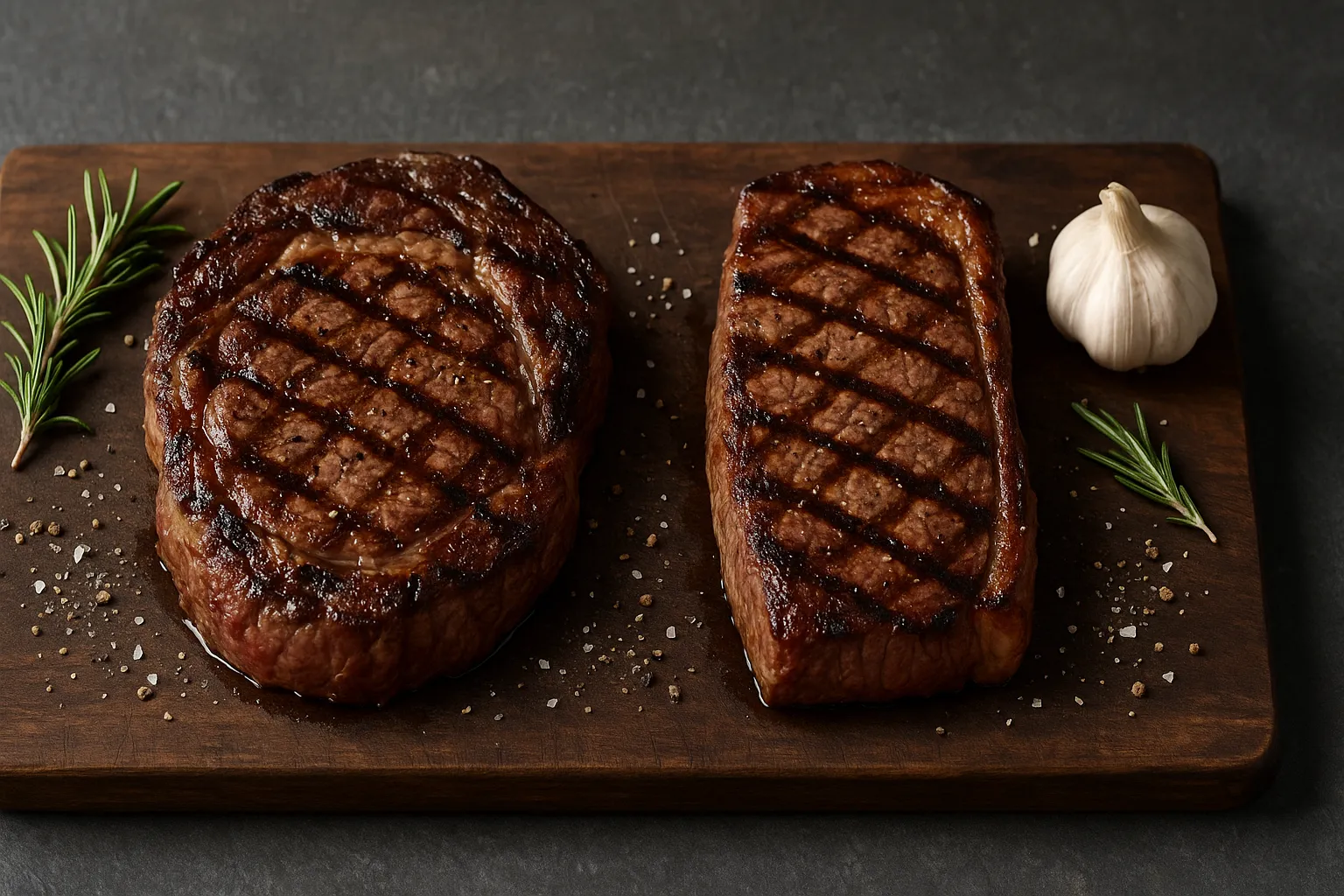
Ribeye vs. New York Strip: Which to Buy?
Unsure which steak to buy? Compare ribeye vs. New York strip—flavor, tenderness, fat, cooking methods, and buying tips to choose the perfect cut.

If you’re choosing between two steakhouse icons—ribeye and New York strip—here’s the punchline up front:
- Pick ribeye if you want ultra-juicy, buttery richness and tenderness from abundant marbling.
- Pick New York strip if you prefer a beefier, firmer bite with a leaner profile and a bold crust.
Below is a practical, no-fluff guide to help you buy (and cook) the right one for your grill night, date night, or meal prep.
Quick Decision Guide
- For an indulgent, “buttery” steak night: Ribeye
- For a leaner, beef-forward chew: New York strip
- For grilling for a crowd (fewer flare-ups): New York strip
- For pan-searing with basting butter: Ribeye or New York strip (both shine)
- Watching calories/fat: New York strip
- Sous-vide then sear: Either—ribeye for richness, strip for structure
- Best value at Prime/Choice grades: New York strip often edges ribeye on price-per-bite
Where They Come From (and What That Means)
- Ribeye – Cut from the rib primal (ribs 6–12). Often the richest marbling of common steaks, which translates to tenderness and intense flavor. Variants: boneless ribeye, bone-in ribeye, cowboy ribeye, tomahawk (extra-long bone).
- New York Strip – Cut from the short loin. Also known as strip steak, sirloin strip, Kansas City strip (usually bone-in). It’s moderately marbled, with a tighter, meaty grain for a satisfying chew.
Note: T-bone and porterhouse include a strip on one side of the bone and tenderloin on the other—different steaks entirely.
Flavor, Texture & Eating Experience
| Attribute | Ribeye | New York Strip |
|---|---|---|
| Marbling | Heavy | Moderate |
| Flavor | Buttery, rich, round | Beefy, slightly “mineral,” cleaner finish |
| Texture | Very tender, luscious | Firm, structured, satisfying chew |
| Best For | Pan-sear + butter baste, reverse-sear, indulgent grilling | High-heat grill sear, weeknight steaks, crowd-pleasing “classic steak” vibe |
Cooking Methods (and Why They Work)
Ribeye
- Reverse-sear (oven/smoker to ~10–15°F below target, then hard sear) to render fat and avoid over-charring.
- Cast-iron sear with butter, garlic, and thyme lets marbling shine.
- Grilling works, but watch for flare-ups—keep a two-zone fire and move it as needed.
New York Strip
- High-heat grill sear builds a superb crust without excessive flare-ups.
- Pan-sear is excellent—strip’s straight edges and uniform thickness make it simple to cook evenly.
- Broil for a steakhouse-style char indoors.
Target Internal Temps (use an instant-read thermometer):
- Rare: 120–125°F (49–52°C)
- Medium-rare: 130–135°F (54–57°C)
- Medium: 140–145°F (60–63°C)
- Rest 5–10 minutes before slicing. (Food-safety note: USDA guidance for whole-muscle beef is 145°F/63°C with a rest.)
Thickness Tips: Aim for 1¼–1½ inches (3–4 cm) for best control and crust.
Nutrition & Fat Content (Typical, Approximate)
- Ribeye: Higher calories and fat due to marbling (think ~600–700 kcal for a cooked 8 oz serving, depending on trim and grade).
- New York Strip: Moderately marbled and generally leaner (often ~450–550 kcal for a cooked 8 oz serving).
Actual numbers vary by grade, trim, and cooking method; use these as ballparks.
Price & Value
Prices shift by grade (Prime vs. Choice), aging (dry-aged costs more), region, and bone-in vs. boneless. Ribeye is often slightly pricier thanks to its marbling and reputation. New York strip can deliver excellent value—especially in USDA Choice—with a great crust and classic steakhouse character.
Bone-In vs. Boneless
- Bone-in ribeye/strip: Impressive presentation and can protect meat from overcooking on the bone side. Slightly longer cook time.
- Boneless: Easier to handle, faster to cook, and simpler to slice uniformly.
Aging & Sourcing
- Dry-aged (21–45+ days): Concentrated, nutty, funky depth. Worth it when you want steakhouse wow.
- Wet-aged: Common at retail; clean, beefy flavor.
- Grass-fed vs. grain-finished: Grass-fed tends to be leaner with a brighter, sometimes “grassy” note; grain-finished (especially Prime) usually offers richer marbling.
Buying Tips
- Grade: Prime (most marbling), then Choice. Look for visible, even marbling.
- Thickness: Choose 1¼–1½ in for consistent results.
- Trim: A tidy fat cap and no ragged edges.
- Packaging: Bright color, minimal purge, and a recent pack date.
- Plan: One steak per person; ribeye is richer, so 10–14 oz satisfies most appetites.
Cooking Playbooks
Cast-Iron (Both Cuts)
- Pat dry, season liberally with kosher salt + pepper (or your rub).
- Preheat skillet until just smoking; add neutral oil.
- Sear 2–3 min per side; lower heat, add butter + aromatics; baste 1–2 min.
- Finish to temp; rest 5–10 min.
Grill, Two-Zone (Ribeye Focus)
- Sear over direct heat 1–2 min/side for crust.
- Move to indirect and finish to temp; rotate if needed.
- Rest, then slice.
High-Heat Grill (Strip Focus)
- Preheat grill hot.
- Sear 3–4 min per side (lid down), flipping once; temp-check early.
- Rest, then slice across the grain.
When to Choose Each
Choose ribeye when you want a special-occasion steak with unparalleled juiciness and that “steakhouse butter” feel—great for pan or reverse-sear. Choose New York strip when you crave a beefier bite, love a robust crust, and want a slightly leaner option that’s easy to grill for a group.
Smart Sides & Sauces
- Ribeye: Creamed spinach, roasted mushrooms, mashed potatoes, peppercorn sauce, compound butter.
- New York Strip: Grilled asparagus, chimichurri, crispy potatoes, arugula + Parmesan salad, red wine reduction.
Frequently Asked Questions
Which is more tender—ribeye or New York strip?
Ribeye is generally more tender thanks to heavier marbling. Strip is still tender but has a firmer, steak-house chew.
Which steak has more flavor?
Both are flavorful—but ribeye tastes richer and “butterier,” while strip tastes beefier and cleaner.
Is New York strip healthier than ribeye?
It’s leaner on average, so it often has fewer calories and less fat per serving, all else equal.
What thickness should I buy?
Aim for 1¼–1½ inches. Thinner steaks overcook quickly; thicker steaks give you a better crust-to-doneness ratio.
Bone-in or boneless—what’s better?
Boneless is easier and faster to cook evenly. Bone-in offers presentation and a touch of insulation on the bone side.
How do I avoid flare-ups with ribeye on the grill?
Use a two-zone fire. Sear over direct heat, then move to indirect to finish. Keep a spray bottle for flare-ups and avoid overly oily marinades.
What’s the best doneness for these steaks?
Most steak lovers prefer medium-rare (130–135°F / 54–57°C) for a juicy, tender bite. Follow your preference and rest the steak.
Does dry-aging make a big difference?
Yes—dry-aged steaks develop a nutty, concentrated depth. It costs more but delivers a classic steakhouse flavor.
Grass-fed vs. grain-finished—what’s the difference in taste?
Grass-fed is typically leaner with a brighter, sometimes grassy note. Grain-finished often has richer marbling and a rounder flavor.
Why is my strip steak chewy sometimes?
Likely overcooked, cut too thin, or lower marbling. Buy Choice/Prime, ~1½ in thick, and monitor temperature closely.
Can I sous vide ribeye or strip?
Absolutely. Ribeye gets ultra-tender and buttery; strip holds structure nicely. Finish with a hard sear for crust.
Is ribeye always more expensive?
Not always, but often—marbling and demand push ribeye prices up. Strip can be the better value, especially at Choice grade.
Final Tip
If you’re cooking for guests with mixed preferences, buy one of each and slice after resting. Everyone gets a taste of rich ribeye and beefy strip—and you’ll learn which cut your crew loves most.